
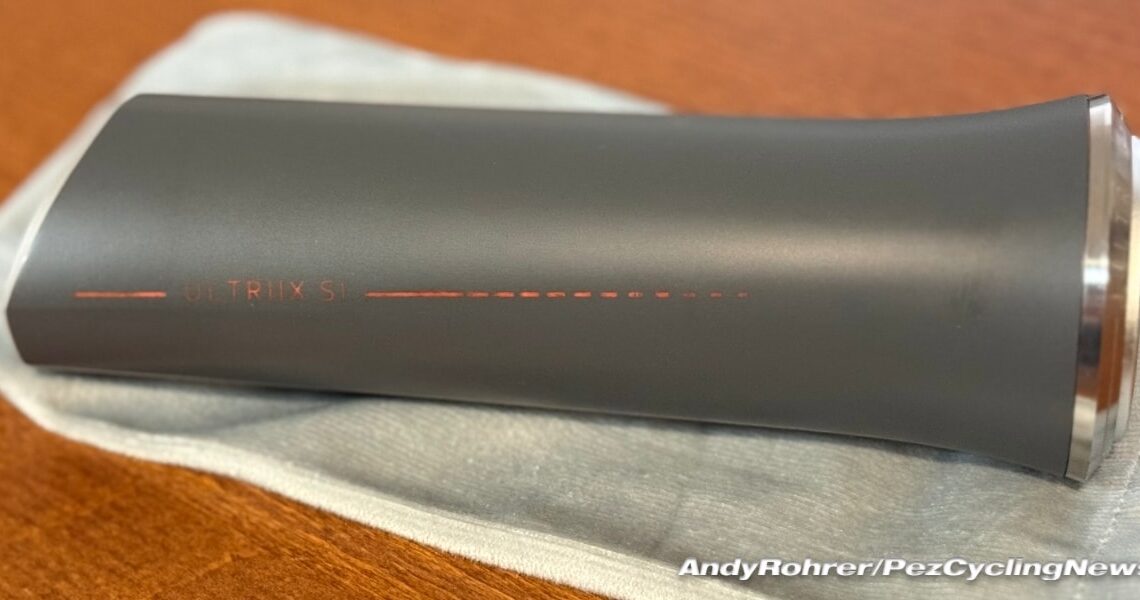

The Ultriix S1
The Ultriix S1 therapeutic ultrasound massager represents a shift in home recovery technology, promising a convenient way to access miniaturized technology normally reserved for clinical settings. Furthermore, Ultriix offers it at an affordable price. Currently in its preproduction phase, this ultra-portable therapeutic ultrasound massager is being crowdfunded via Indiegogo.
Ultriix sez: “After the campaign ends, Ultriix S1 will enter its late-pledge period on Indiegogo with a higher price…We are also preparing the switch from Indiegogo to our website. More purchase channels like TikTok shop and local distributor will be available step by step.”
According to Ultriix, once the crowdfunding campaign concludes on January 15, 2026, the pricing for late-pledge supporters will increase from the current price of $99. Given the manufacturer’s location in mainland China, it is anticipated that the device will be sold through formal online global exchanges like Alibaba and direct-to-consumer websites.
What is the Ultriix S1?
It is a handheld recovery massager. Unlike percussive massage guns, it is delivers therapeutic ultrasonic deep tissue massage. The device is the size of D-Cell powered flashlight, or torch for my non-North American Commonwealth pals.
 It has a rechargeable battery, charged via a USB-C (Power Delivery) port. The unit is provided with a USB-C to USB-C cable; charging the unit is achieved with a Power Delivery capable power adapter.
 There is a single button for turning the device on/of and adjusting the intensity. The intensity is indicated by 4 single color LEDs.
The tech: 1.1 MHz therapeutic ultrasound
Despite being dubbed the “Tissue Shocker,” Ultriix S1 therapeutic ultrasound massager delivers no electric shocks or high-energy shockwaves. It does not use electrotherapy, or electric shock stimulation, an it is not an Extra-Corporeal Shockwave Therapy (ESWT) device. Instead, it utilizes a 1.1 MHz piezo-electric ceramic transducer to deliver therapeutic ultrasound.
While diagnostic ultrasound (used in prenatal care) creates images, therapeutic ultrasound uses sound waves to deliver deep heat and micro-vibrations into soft tissues. At the 1.1 MHz frequency, these waves can penetrate 3–8 cm below the skin, targeting deep fascia and muscle groups that mechanical and percussive massage cannot reach.

The science: how ultrasonic therapy works
Therapeutic ultrasound aids recovery through three primary, non-invasive pathways that do not require a PhD to appreciate. Put simply they fall into two categories: thermal and non-thermal. The three pathways (described in detail at the provided link above) are:
-
Thermal Effect (Deep Heating): As tissues absorb the waves, they generate localized internal heat. This causes vasodilation (widened blood vessels), flooding the area with fresh oxygen and nutrients to flush metabolic waste like lactic acid.
-
Mechanical Effect (Acoustic Streaming): Waves create “micro-streaming,” a gentle movement of fluids that increases cell membrane permeability. This helps the body more efficiently remove inflammation and swelling. (NIH / PMC6128661)
-
Stable Cavitation: Acoustic pressure causes microscopic gas bubbles in the tissue to vibrate, signaling the body to accelerate protein synthesis and cellular repair. Ultriix claims this is particularly effective for mitigating Delayed Onset Muscle Soreness (DOMS), an inflammatory response that manifests as soreness and stiffness.
The difference: ultrasound vs. percussive massage
While the ultrasonic S1 and tools like the percussive Therabody Theragun aim for faster healing, they are fundamentally different:
-
Mechanism: A massage gun uses blunt mechanical force to knead the top 1–2 cm of tissue. The S1 uses acoustic energy to stimulate tissue at a cellular level, reaching deeper without the impact of a strike.
-
The Experience: Massage guns are noisy, but can be used over clothing. The S1 is mostly silent but must be in direct contact with the skin using a conductive ultrasound gel to enable the transducer. While the gel can be messy, the S1’s advantage is its ability to treat sensitive areas like joints or tendons where a percussive “hammer” would be too painful.
The Ultriix S1 in use
I’ve used the Ultriix S1 therapeutic ultrasound massager regularly for about four weeks. Two weeks into testing, I switched from a base training block to an eight-week build block. The initial weeks of a build can be intense, and DOMS is common, making it the perfect period to test a recovery device.
The results were immediately tangible. Post-workout stiffness and muscle tightness was reduced—particularly after high-intensity Tempo and VO2 Max workouts. While DOMS still set in a day or two later, it was far less severe than I have experienced in previous build blocks. Critically, it presented no issues for mobility or conducting successive workouts.
Operation and Setup
The test unit I received lacked documentation, which was initially troubling as I found no specific instructions on duration of use or safety warnings. Ultriix assures me that they have developed a full manual and will include it with production units.
Operating the device is otherwise intuitive. Press and hold the power button to activate the unit, and press it briefly to cycle through eight intensity levels across four LEDs (e.g., Level 5 shows two solid LEDs and a third blinking). When active, the device is entirely silent and vibration-free, save for a very faint clicking sound.

Because ultrasound requires a conductive medium to travel, I used the provided conductive gel. Initially, I used a bit too much, which made for a mess as the gel is quite watery. After a few sessions, I learned to be sparing with the gel to minimize mess. When required, I just added a small amount more to maintain conduction. The device stops “whirring” if contact is lost, or the gel dries out, and reverts to a faint click until contact is restored.
Moving the ceramic head slowly over the skin, I felt a localized warmth, but it never became uncomfortably hot. I settled on a routine of five minutes per muscle group (quads and hamstrings), totaling about 20 minutes per session. It is a time commitment, so you will need to plan it into your post-ride protocol.

Results and Final Impressions
Initially, I wasn’t sure if the device was doing anything beyond a pleasant “warm tingle.” Regardless, I noticed my legs felt fresher at the start of succeeding sessions. The “painful tightness” I usually associate with a build block was absent, and navigating the steep staircase in my house was no longer a chore.
I accidentally confirmed that the results weren’t placebo effect when I skipped the treatment a couple of times due to time constraints. In those instances, I noticed significantly more fatigue the following day. I have now become diligent about budgeting time for the S1 and have even begun using it on rest days to maintain tissue mobility.
Ultriix S1: Technical Specifications
The bottom line
The Ultriix S1 offers a sophisticated, clinical-grade alternative to traditional recovery tools by focusing on cellular-level stimulation rather than surface-level mechanical force. Its primary strength lies in the 1.1 MHz ultrasonic technology, which provides a therapeutic benefit capable of reaching tissues up to 8 cm below the skin—depths that standard percussive tools simply cannot access. My testing during a high-intensity build block confirmed its potential to significantly mitigate the severity of DOMS and reduce post-workout stiffness. While the requirement for conductive gel and a 20-minute time commitment makes it a more deliberate recovery protocol, the result is a noticeable improvement in leg freshness and a faster return to peak training readiness.
PezCycling News and the author are making no medical or other therapeutic claims, nor is this being offered as advice. This review is for informational purposes only. Always consult with a qualified healthcare professional before beginning any new recovery or therapeutic protocol.
The post Review: Ultriix S1 therapeutic ultrasound massager – “Tissue Shocker!” appeared first on PezCycling News.